The first thing they try doesn’t work
Kids try one thing. It doesn’t work. And that is where it ends — as though that was the only door in the room.
In the room: mapping every option before acting, then pushing past the obvious two or three.
Lock in your founding rate — $149/month for the first 10 families, plus applicable taxes.
You'll receive an email with payment setup instructions. Privacy policy.
No diagnosis, no crisis — just the ordinary friction of growing up. In each of these there was another way through, and it went unseen.
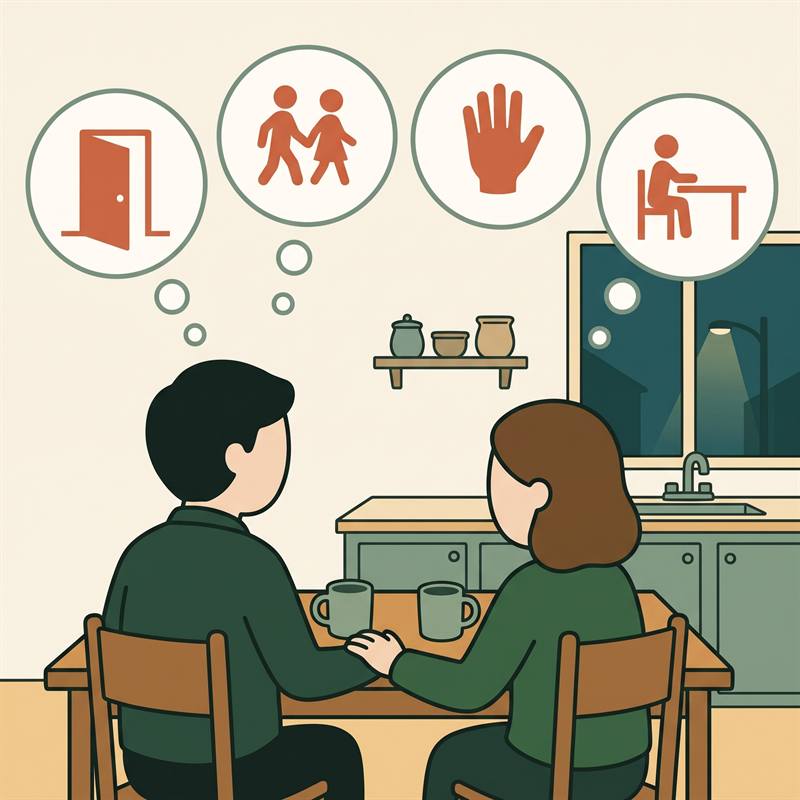
Kids try one thing. It doesn’t work. And that is where it ends — as though that was the only door in the room.
In the room: mapping every option before acting, then pushing past the obvious two or three.
The group moves and kids move with it — then afterwards tell you exactly why it was a bad idea.
In the room: rehearsing the small, quiet exits that hold a friendship together and still say no.
It is the speed. Whatever comes out first is what kids go with — and then spend the next hour wishing they hadn’t.
In the room: the pause itself — noticing the pull before deciding what to do about it.
Either kids do what the group wants or lose the group entirely. There is never a third thing worth trying.
In the room: finding that third option out loud, with a group that is looking for it too.
We won't promise a changed child, and we won't put a number on it. These are the capacities the sessions are built to exercise.
Slowing down the gap between something happening and doing something about it — especially when emotions or peer pressure are running high.
Language and options for hard social moments: misunderstandings, being left out, fairness, and holding a boundary without blowing things up.
Thinking through what a choice actually causes — in school, in friendships, and in digital spaces where things don't get taken back.
Flexible thinking, so a child is less likely to feel stuck between doing nothing and making it worse.
A small group, guided by a facilitator, small enough that participating is not optional and not frightening.
Every session ends with a small real-world goal to try before the next one — so the skill leaves the room with them, and does not stay in it.
There is research behind why this particular skill. Why options matter →
Your child practices structured decision-making every week — naming options most people miss, weighing them, and choosing with intention under real peer pressure.
A trajectory, not a report card. You’ll see three signals tracked per child — options named per session, which “door” they default to, and whether their thinking is turning more constructive week over week.
Every session ends with one concrete goal tied to your child’s own life — and you get a short summary of exactly what was practiced, so you can echo it at the dinner table.
The more options a child can see in a hard moment, the less they freeze or react on impulse. That’s what the practice builds toward — steadier, braver choices when it counts.
Designed exclusively to train decision-making as a cognitive skill — measurable, practicable, and transferable.
Three signals tracked per child: options named, sentiment trajectory, and door profile. You'll see it on a chart.
Deliberately small. Decision-making is learned socially — you need real peers, real friction, and a facilitator who can track every child.
Every scenario is built for Redmond's demographic — bicultural pressure, digital life, school achievement, peer dynamics.
Progress reports show what changed — not a grade, a trajectory. Short-program families get a report at cycle end; monthly families get one every month.
If you recognized your child anywhere on this page, that is who the room is built for. Tell us your child's age and we'll be in touch when the next cohort in their track opens.